16 hyperscale data centersdo not belong on farmlandsurrounded by homes
PAX-1 is a three-campus hyperscale data center with 16 planned buildings on 700 acres in central Pennsylvania. Middlesex Township changed zoning to allow the site. We are fighting to change the rules back.
PAX-1 Site · Country Club Road · Middlesex Township, Cumberland County, PA
The Zoning Story
How we got here
A company from Virginia came to the township with a request: create a zoning overlay written specifically for their property — a Data Center Overlay District, or DCO. The township obliged. But what exactly does that mean?
The mechanism
A zoning overlay is like a sticker
- 01
The zoning map
Every parcel of land carries a label saying what can be built on it. Homes go on residential labels, farms on farm labels, factories on industrial labels.
- 02
The overlay
An overlay is a sticker placed on top of that label. It says: this land can also be used for one extra, special thing.
- 03
Two rules, one parcel
The label underneath never changes. The sticker simply adds a new permission on top — two sets of rules governing a single piece of land.
Timeline
The sticker goes on
At the request of the land owners, the township stuck the Data Center Overlay on a 694-acre farm on Country Club Road. At the time, the land had a Rural Farm (R-F) label.
The developer's attorney even helped township staff and consultants write the rules for how data centers would be regulated in the DCO.
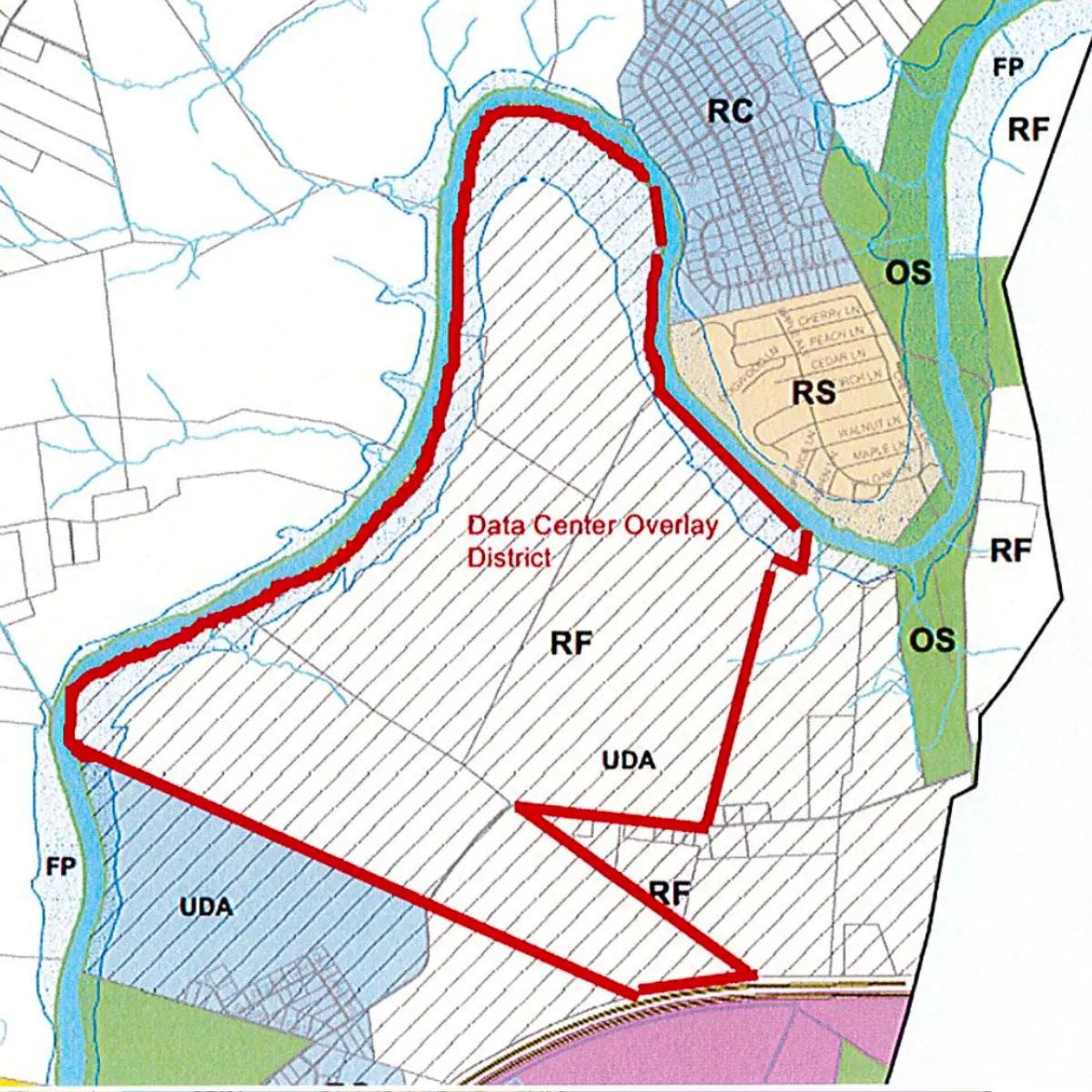
A New Zoning District
In September 2025, the township rewrote its whole zoning map. This land got a new label: Mixed-Use Neighborhood (MU-1).
The district permits a mix of residential uses supported by neighborhood-scaled commercial uses having limited impacts on surrounding residential areas. Mixed-Use Development is intended to be pedestrian-oriented and compatible with the scale and characteristics of adjacent residentially zoned areas or low-rise commercial areas.
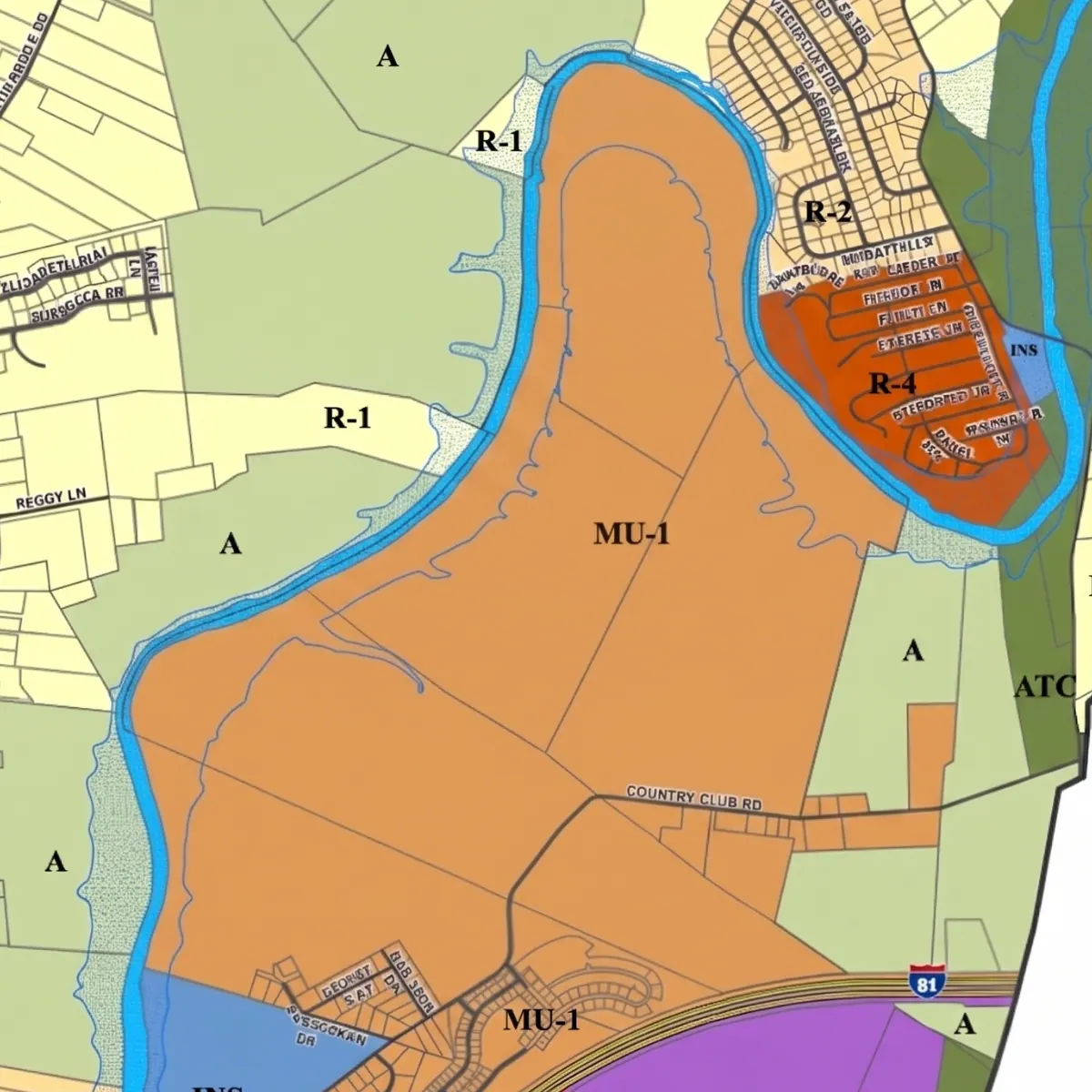
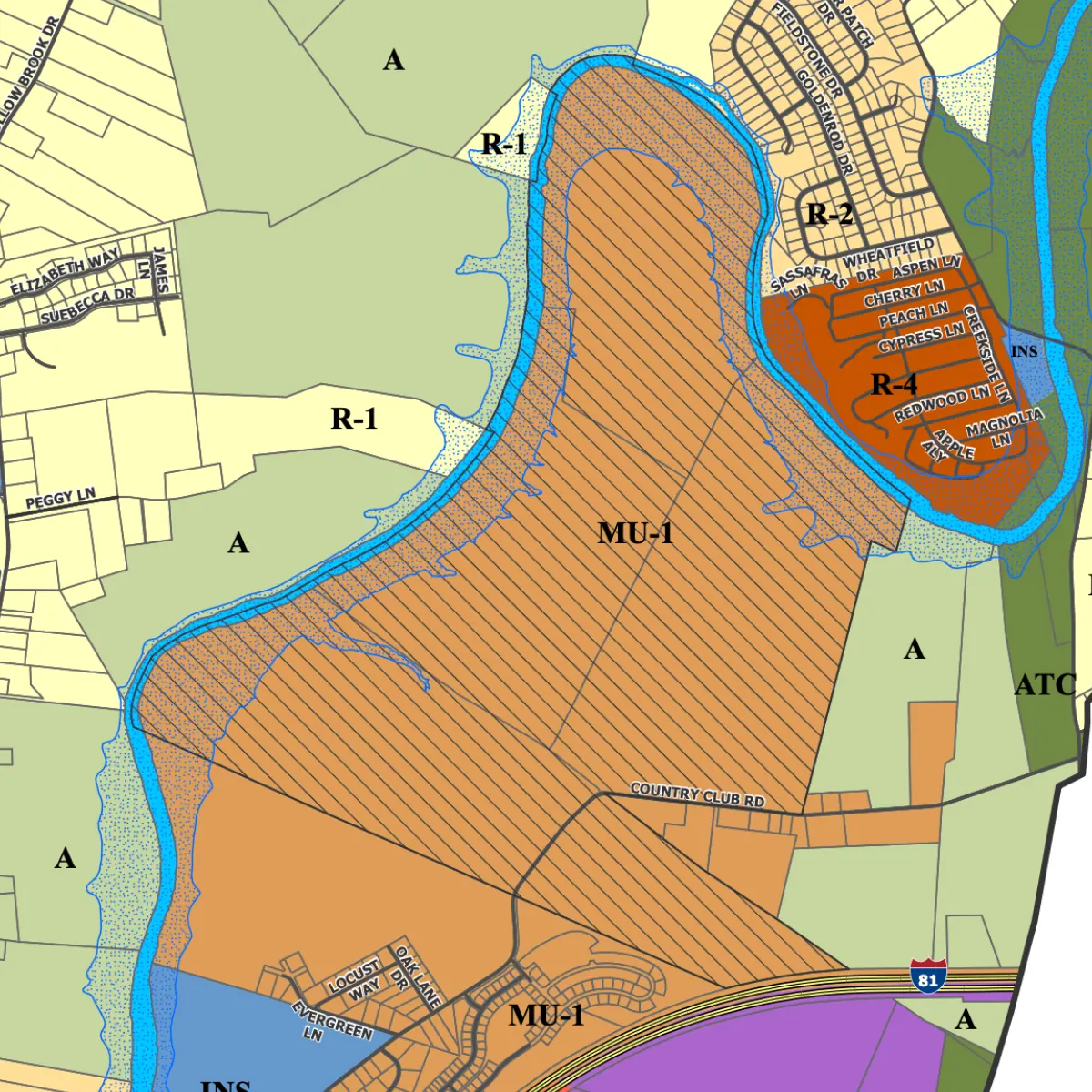
New label. Same sticker.
The township's zoning says MU-1 is for "low-impact" development that belongs next to homes — houses, small shops, a church.
The data center sticker stayed on top.
A neighborhood label. An industrial sticker. They don't belong together.
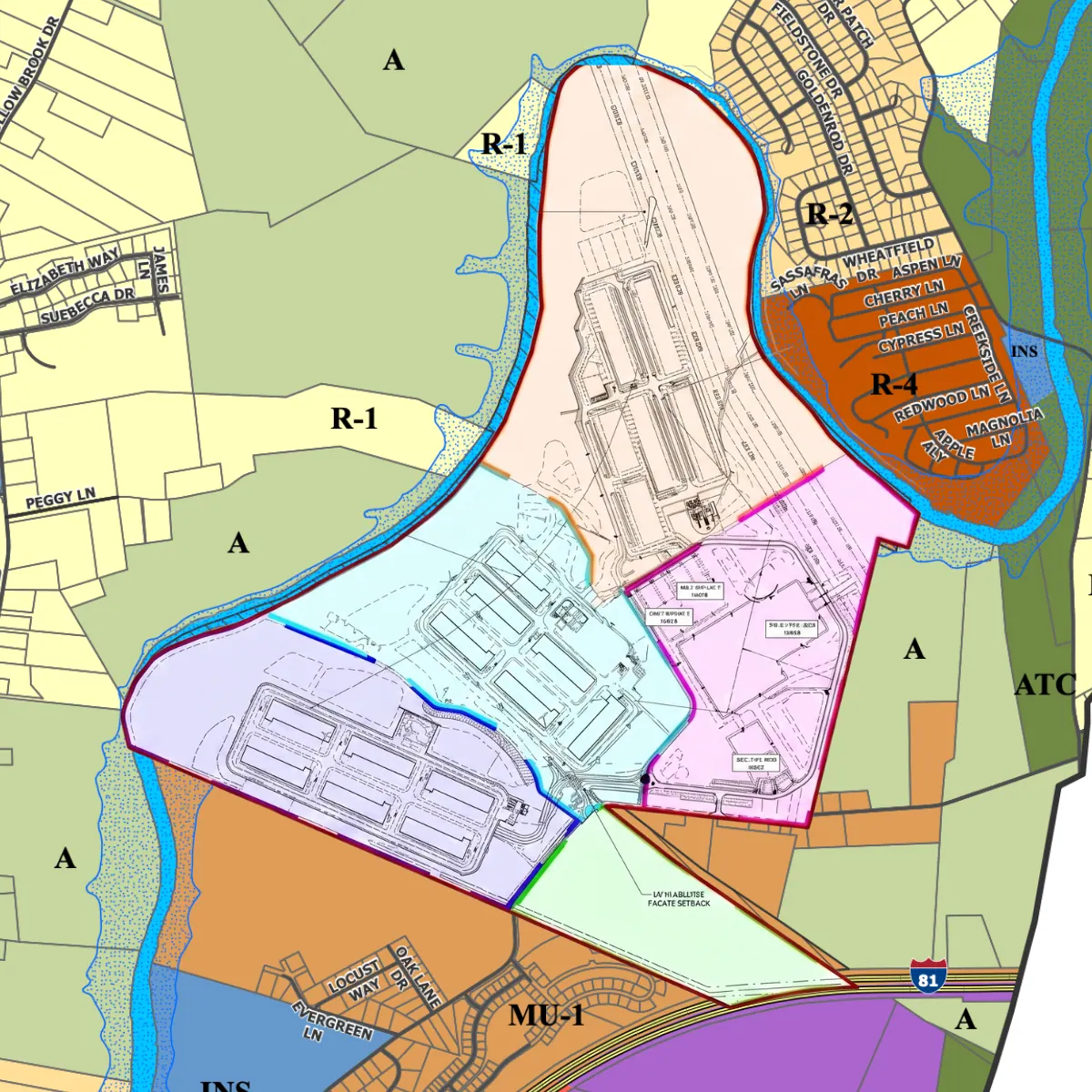
The Industrialization of a Neighborhood
Construction began before the plans had even received final approval — on a site set to become one of the largest hyperscale data centers in the USA.
They dropped it right next to homes, farmland, wetlands, the Appalachian Trail, and the Conodoguinet Creek.
The Zoning Problem
The overlay looks nothing like the neighborhood beneath it — or anything next to it
The label says neighborhood. The sticker says industrial. They do not match — and everyone knows it.
The Uses Don't Align
The Data Center Overlay is a huge jump up the usage scale
Every kind of building has its place. Data centers belong at one end. The township put this one at the other.
Neighborhood
- Houses
- A corner store
- A church
Village
- A little main street
- A coffee shop
- Apartments over shops
Institutional
- A school
- A library
- A hospital
Highway Commercial
- A gas station
- A restaurant
- A hotel
Light Industrial
- A warehouse
- A car repair shop
- A small workshop
Industrial
- A factory
- A power plant
- A truck terminal
A data center is an industrial use. By Middlesex Township's own ordinance, it's allowed in exactly one zone: Industrial — the far, heavy end of the scale.
The land on Country Club Road sits at the opposite end, zoned MU-1 — the quiet, neighborhood end. Between them sit four other zones.
The township skipped all four.
They took the heaviest use on the scale and stuck it on the quietest end.
Who benefitted from this zoning change?
The Board of Supervisors served one property owner — and ignored the residents it's meant to protect.
The request
The developer asked the Board for a Data Center Overlay — the zoning they needed to secure PPL power for their project.
The approval
The Board adopted the overlay at a 7:30 AM Friday workshop — with only a handful of residents in the room.
Where the Board fell short
- Took the developer's sales pitch as fact.
- Did no independent research into the harms these facilities bring.
- Set aside its duty to protect residents' Environmental Rights under the Pennsylvania Constitution.
Thirty-five days after they asked, the developer had exactly what they wanted.
Article I, Section 27, Pennsylvania Constitution
The Environmental Rights Amendment
"The people have a right to clean air, pure water, and to the preservation of the natural, scenic, historic and esthetic values of the environment. Pennsylvania's public natural resources are the common property of all the people, including generations yet to come. As trustee of these resources, the Commonwealth shall conserve and maintain them for the benefit of all the people."
The Pennsylvania Constitution gives every person the right to clean air, pure water, and the natural beauty around them. It makes the government a trustee — bound to protect these things for everyone, including the generations not yet born. The Board of Supervisors had that duty. It did not honor it.
Conditional use vs. by right
What "by right" took away
The Board of Supervisors could have kept its power to protect residents. Instead, it handed the keys to the developer.
Conditional Use
The Board holds a public hearing. You can come. You can speak. You can bring your own experts. You can ask questions. The Board can say: "Yes — but only if you keep the noise down, limit the water, add a buffer, and protect the wells." Those rules become law for the project.
By Right
No hearing about whether the project fits the neighborhood. No special rules. If the plans check the boxes, the township has to approve them. You don't get a say beyond public comment.
In Middlesex Township, a warehouse needs a public hearing. A truck terminal needs a public hearing. A solid waste facility needs a public hearing. A hyperscale data center — larger and more intense than all of them — needs none. It's automatic.
- Warehouse and DistributionPublic hearing
- Truck TerminalPublic hearing
- Truck or Truck Trailer ParkingPublic hearing
- Solid Waste Disposal FacilityPublic hearing
- Planned Center, IndustrialPublic hearing
- Data CenterNo hearing
At the September 3, 2025 hearing, residents asked the Board to make data centers a conditional use instead of by right. The Board said no.
By choosing "by right," the Board gave up its own power to protect the people who live here. No hearing. No conditions. The developer just builds.
Legal Challenge
Pennsylvania has a name for this. It is called spot zoning and it is illegal.
Zoning is the township's rulebook. It says what can be built where — houses go in house places, farms go in farm places, and heavy industry goes in industry places.
Spot zoning is when the township changes that rulebook for one piece of land to a use that looks nothing like its neighbors — all for the benefit of one property owner.
Pennsylvania courts have said no to this type of thing for years.
We are asking the Middlesex Township Zoning Hearing Board to say no here too.
Our Goal
Take the sticker off. Leave the neighborhood label.
We are appealing to invalidate the DCO. If we win, the sticker comes off. The MU-1 label stays.
Everyone knows 16 hyperscale data centers don't belong in residential areas. We are trying to remove the Data Center Overlay because it was illegally applied.
Take Action
Three steps. Pick yours.
Start with the petition — it's free and goes on the record. Donations pay for the lawyers we need to win. Volunteers do the work in between.
Sign the petition
Add your name to the public record opposing the DCO. We share signatures with the Zoning Hearing Board ahead of July 8.
Fund the fight
Spot-zoning appeals win on briefs, experts, and transcripts — every one of which costs money. 100% goes to the legal fund.
Volunteer
We need lawyers, engineers, writers, door knockers, and neighbors who can show up on July 8. Tell us your super power.